Key Takeaways
- An order block is a price zone, usually the last opposing candle before a strong move, where large participants are believed to have placed significant orders.
- A bullish order block is the last down candle before a strong rally. A bearish order block is the last up candle before a strong drop.
- Order block trading works best as a context tool combined with market structure, liquidity, and higher-timeframe bias, not as a standalone signal.
- Identification is subjective, and independent evidence that retail traders can spot institutional footprints is thin. Risk management matters more than the pattern.
What Is an Order Block in Trading?
An order block is a price zone on a chart where large buyers or sellers are believed to have placed significant orders just before a strong directional move. Traders mark it as the last opposing candle before that move and watch it for a reaction when price returns.
That is the short version of what an order block in trading means. The idea comes from Smart Money Concepts (SMC) and the ICT framework, which argue that institutional order flow, not retail sentiment, drives price in liquid markets. Order block trading is built on the ICT (Inner Circle Trader) idea that institutional order flow is the main driver of price. xbtfx
The logic is simple. A bank or fund that needs to buy a very large position can’t do it in one click without pushing the price up against itself. So it builds the position in stages. The zone where that happened, the theory says, may still contain unfilled orders. When price revisits it, those orders may kick in again and price may react.
Treat this as a theory, not a fact. CMC Markets says the concept describes a consolidation zone that some traders believe reflects institutional accumulation, and it notes the claim is unverified by independent research (see the risks section below).
Bullish vs Bearish Order Blocks
| Feature | Bullish order block | Bearish order block |
| Candle marked | Last down candle before a strong up-move | Last up candle before a strong down-move |
| Expected behavior | Acts as a demand / support zone | Acts as a supply / resistance zone |
| Trade bias | Look for long entries on a retest | Look for short entries on a retest |
| Location | Sits below current price | Sits above current price |
| Ideal context | Higher-timeframe uptrend | Higher-timeframe downtrend |
Alchemy Markets describes a bullish block as a support zone below price and a bearish block as a resistance zone above price, and notes both can fail and flip into a breaker block. alchemymarkets
How to Identify an Order Block (Step by Step)
- Find an impulsive move. Look for a clear, strong directional push that stands out from surrounding candles. Small wiggles don’t qualify.
- Trace back to the origin. Find where the move began.
- Mark the last opposing candle. For a bullish block, that’s the last down candle before the rally. For a bearish block, the last up candle before the drop.
- Draw the zone. Use the candle’s high and low (or body, if you prefer a tighter zone). Be consistent.
- Check it against the validity checklist below.
The 6-Point Order Block Validity Checklist
Not every candle before a move deserves a rectangle. Before you trade a block, check for these:
- Displacement. The move away is fast and strong, not a slow grind.
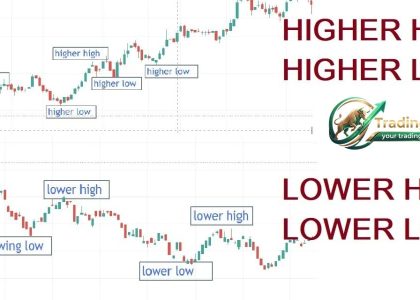
- Break of structure. The move takes out a prior swing high (bullish) or swing low (bearish).
- Imbalance. A fair value gap or price gap appears in the move.
- Follow-through. Alchemy Markets suggests a practical filter: after the pivot candle, the fourth candle should still hold beyond its range to confirm the block. alchemymarkets
- Freshness. The block hasn’t been tapped yet. Unmitigated blocks are generally seen as more reliable than ones already touched. alchemymarkets
- Higher-timeframe alignment. The block agrees with the bigger trend.
If a block fails three or more of these, skip it. Marking too many blocks is one of the most common beginner mistakes.
Types of Order Blocks
- Bullish and bearish order blocks: the two core types above.
- Breaker block: an order block that price has broken through and that now acts from the opposite side. A failed bullish block becomes resistance, and a failed bearish block becomes support.
- Rejection block: a block drawn only on a long wick. Alchemy Markets suggests treating a wick around 40% of the candle’s range as the threshold for a rejection block. alchemymarkets
- Mitigation block: a zone where price returns to “mitigate” or fill remaining orders. Treat the label as a way of describing behavior, and rely on structure for the actual trade.
How Order Block Trading Works: A Simple Strategy
The strategy is to wait for price to come back to a marked block, then trade a reaction. Here is a beginner-friendly framework:
- Set bias on a higher timeframe (daily or 4-hour). Only look for bullish blocks in an uptrend and bearish blocks in a downtrend.
- Mark a valid block using the checklist above.
- Wait. Price may take hours, days, or weeks to return, or never return.
- Drop to a lower timeframe (15-minute or 5-minute) once price enters the zone.
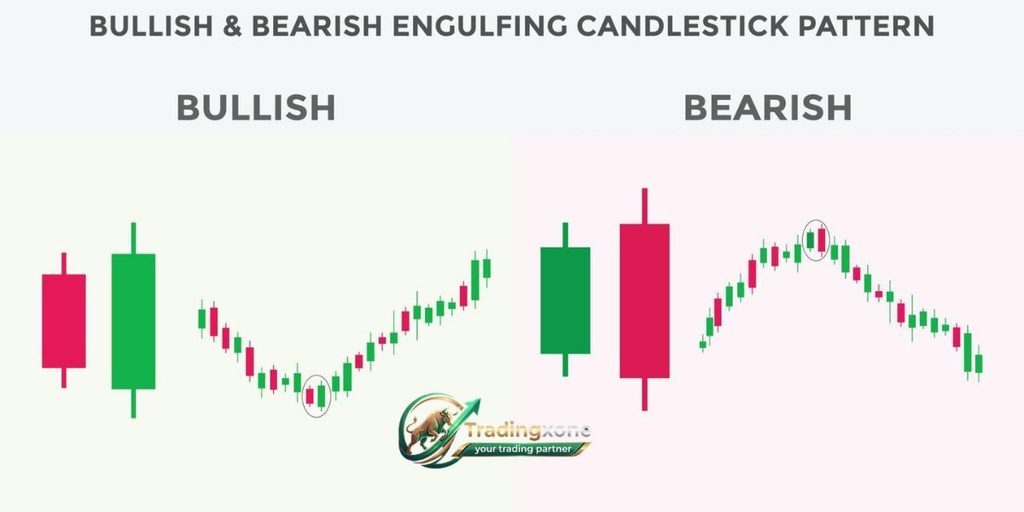
- Wait for confirmation: a rejection wick, an engulfing candle, or a lower-timeframe break of structure back in your direction.
- Enter, place your stop, and set a target at the next opposing liquidity or structure level.
A common refinement is trading the midpoint of the block. Many SMC traders watch the 50% level of the block, called Consequent Encroachment, either placing a limit order there or waiting for a reaction first. alchemymarkets
Worked Example (Illustrative Numbers)
These figures are hypothetical and show the math only. They are not a real trade or a recommendation.
Suppose EUR/USD is in a daily uptrend. On the 4-hour chart, price drops, prints a last down candle spanning 1.0800 to 1.0830, then rallies hard and breaks the prior swing high.
- Bullish order block zone: 1.0800 to 1.0830
- Entry: after price returns and a 15-minute bullish engulfing candle forms at 1.0820
- Stop-loss: 1.0790, just below the block (30 pips of risk)
- Target: 1.0880, near the prior high (60 pips of reward)
- Risk-to-reward: 1:2
If you risk 1% of your account, a full stop-out costs 1%. Two winners at 1:2 roughly cover four losers plus the transaction costs, but that assumes discipline and a real edge, which nobody can guarantee.
Where to Place Your Stop-Loss
Common stop placements include just outside the block, beyond the block’s midpoint for a tighter stop, or beyond a nearby fair value gap to avoid liquidity sweeps. In practice: alchemymarkets
- Outside the block: the standard choice. It gives price room to wick into the zone.
- Too tight: stops sitting right at the edge get swept often.
- Position size first: decide how much you’re willing to lose, then size the trade to the stop distance, not the other way around.
Order Block vs Other Concepts
Order block vs support and resistance. Support and resistance are usually horizontal levels based on repeated price reactions. Order blocks are zones tied to a specific candle before a strong move. CMC Markets puts it this way: support and resistance rely on historical price reactions, while order blocks rely on assumed institutional activity. cmcmarkets
Order block vs supply and demand zones. In practice they overlap heavily. Supply and demand zones are broader and more discretionary, while order blocks aim for a more specific candle-based zone.
Order block vs fair value gap (FVG). An order block marks the last opposing candle before a move, while a fair value gap is a three-candle imbalance that shows how aggressive the move was. They often appear together, and the overlap is treated as extra confluence. alchemymarkets
Order block vs breaker block. A breaker block is an order block that failed and flipped. It’s the same zone, but it acts from the other side.
Best Timeframes for Order Block Trading
There’s no single best timeframe. Sources broadly agree on a pairing approach: the higher timeframe defines where a zone matters, and the lower timeframe confirms your entry. Common pairings: liquidityscan
| Style | Bias chart (mark the block) | Entry chart (confirm) |
| Swing trader | Weekly / Daily | 4-hour / 1-hour |
| Day trader | 4-hour / 1-hour | 15-minute / 5-minute |
| Scalper | 1-hour / 15-minute | 5-minute / 1-minute |
Lower timeframes produce more blocks and more false ones. Beginners generally do better starting higher.
Common Order Block Trading Mistakes
- Trading against the higher-timeframe trend. A bullish block on a 15-minute chart inside a strongly bearish daily trend is likely to be run through. acy
- Marking every candle that looks like a block.
- Entering blindly at the edge without waiting for a reaction.
- Ignoring news. A scheduled high-impact release can blow through any zone.
- Over-leveraging. Leverage magnifies a wrong read of a block.
- Cherry-picking history. Blocks look obvious after the fact. Test on charts you haven’t seen yet.
Risks and Limitations: The Honest Part
Order block trading is popular, but it isn’t proven. CMC Markets lists several weaknesses: subjective identification, lack of empirical validation, hindsight bias, changing market conditions, and over-optimisation of rules to fit past data. It also states that 68% of retail investor accounts lose money trading CFDs with that provider. cmcmarketscmcmarkets
Two blocks drawn by two traders on the same chart often differ. A sharp move may come from a news release or retail momentum instead of any institution. And electronic and algorithmic execution keep changing how big orders are worked.
What this means for you: use order blocks to organize your thinking about zones, keep your risk small, journal every trade, and demo-test before using real money. No candle pattern removes the risk of loss, and if you trade leveraged products you can lose more than your deposit.
How We Approach It at Trading Xone
At Trading Xone, we treat order blocks as one layer of a market-structure-first process: trend direction and structure first, zones second, execution last. If a block doesn’t line up with structure and a clear invalidation level, we don’t treat it as a setup, no matter how clean it looks.
Frequently Asked Questions
What is order block trading?
Order block trading is a technical analysis approach that marks the last opposing candle before a strong move as a zone of interest, then looks for trade entries when price returns to it. It’s part of Smart Money Concepts.
What is an order block in simple terms?
It’s the last down candle before a big rally (bullish) or the last up candle before a big drop (bearish). Traders believe large orders were placed there and that price may react when it comes back.
How do you find an order block?
Find a strong impulsive move, trace back to its origin, and mark the last opposing candle. Then check it for displacement, structure break, imbalance, follow-through, freshness, and higher-timeframe alignment.
What is the difference between a bullish and bearish order block?
A bullish block is the last down candle before an up-move and acts as demand. A bearish block is the last up candle before a down-move and acts as supply.
Do order blocks really work?
Sometimes, and not reliably. They can help you define zones and risk, but identification is subjective and independent evidence is limited. Results depend far more on risk management and context than on the pattern itself.
What is the best timeframe for order block trading?
There isn’t one. Mark blocks on a higher timeframe (4-hour or daily) and refine entries on a lower one (15-minute or 5-minute). Beginners usually do better on higher timeframes.
What is a breaker block?
A breaker block is an order block that price has broken through. It flips role, so former support becomes resistance and vice versa.
What’s the difference between an order block and a fair value gap?
An order block is the last opposing candle before a move. A fair value gap is a three-candle imbalance. They often overlap, and traders treat the overlap as stronger confluence.
Can order block trading work in crypto, stocks, and forex?
Traders apply it across forex, crypto, indices, commodities, and stocks. It tends to be discussed most for liquid markets where large orders are common.
Conclusion
Order block trading gives you a structured way to think about where large participants may have acted and where price might react again. Learn the definition, mark blocks on higher timeframes, filter them with the six-point checklist, and always define your stop before you enter. Just remember it’s an area of interest, not a signal, and it carries real risk. Start on a demo account, keep a journal, and let the evidence from your own trades decide whether it earns a place in your plan.