Key takeaways
- A stop loss is an order that automatically closes your position once price hits a level you set, capping your downside without you watching the chart.
- You can place a stop loss based on a dollar amount, a percentage, volatility (ATR), a support/resistance level, or a moving average.
- Your stop loss should be based on where your trade idea is proven wrong, not just on how much money you’re comfortable losing.
- Position size, not stop distance, is how you control dollar risk. Set the stop where the chart says, then size the trade to match.
- A stop loss that’s too tight gets hit by normal volatility. Too wide, and it stops protecting you.
A stop-loss order is one of the simplest, highest-leverage risk management tools in crypto trading, and one of the most commonly misused. Set it too tight and normal volatility stops you out of a good trade. Set it too wide, or skip it entirely, and one bad move can erase weeks of gains. This guide walks through what a stop loss actually is, five practical ways to set one, a worked example with the math shown, and the mistakes that quietly wreck most traders’ risk management.
What Is a Stop Loss in Crypto Trading?
A stop-loss order is a pre-set instruction that closes your position once the price reaches a level you define, limiting how much you can lose on that trade. When price hits your stop price, the order typically converts into a market order and executes at the next available price.
Example: you buy Bitcoin at $30,000 and set a stop-loss at $27,000. If BTC drops to $27,000, the position closes automatically, capping your loss at roughly 10%, rather than leaving it open-ended.
Stop-loss orders matter more in crypto than in many traditional markets because crypto trades 24/7 with no closing bell, and prices can move sharply while you’re asleep or away from the screen.
Stop Loss vs. Take Profit
| Stop Loss | Take Profit | |
| Triggers when | Price moves against you | Price moves in your favor |
| Purpose | Caps your loss | Locks in your gain |
| Placement | Below entry (long) / above entry (short) | Above entry (long) / below entry (short) |
Most traders set both at the same time they enter a trade, not after, so the exit plan exists before emotions do.
Why Setting a Stop Loss Matters
- It defines risk before you enter. You know your maximum loss on the trade before you click buy, not after.
- It removes emotion from the exit. Fear and hope are the two things that make traders hold a losing position too long. An automated stop removes that decision from the moment of maximum stress.
- It costs nothing until triggered. A resting stop-loss order typically doesn’t cost a fee unless it executes.
- It frees you from watching the chart. You don’t need to be at your screen 24/7 to manage downside risk in a market that never closes.
5 Ways to Set a Stop Loss in Crypto Trading
There’s no single “correct” stop distance. The right method depends on your trading style, the asset’s volatility, and your risk tolerance.
1. Percentage-Based Stop Loss
Set your stop a fixed percentage below your entry price.
Example: Buy BTC at $30,000. With a 10% risk tolerance, your stop sits at $27,000.
Simple and consistent, but it ignores how volatile the specific asset actually is right now.
2. Dollar-Amount Stop Loss
Set your stop based on the exact dollar amount you’re willing to lose on the position.
Example: Buy 1 BTC at $30,000. To risk only $2,000, set your stop at $28,000.
Useful when you think in fixed dollar risk per trade rather than percentages.
3. Volatility-Based Stop Loss (ATR)
Use the Average True Range (ATR) indicator to size your stop to the asset’s actual recent volatility, instead of an arbitrary percentage.
Example: BTC’s 14-day ATR is roughly 1,000.Placingyourstop1.5xATRaway(1,500) gives the trade room to breathe through normal daily noise without capping upside prematurely.
This adapts automatically: tighter stops in calm markets, wider stops in volatile ones.
4. Support and Resistance Stop Loss
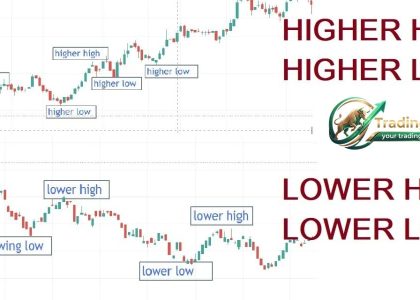
Place your stop just beyond a meaningful chart level, a prior swing low (for longs) or swing high (for shorts), rather than at an arbitrary price.
Example: BTC has repeatedly bounced near $28,500. A long entered above that zone might use a stop just below it, at $28,200, so the stop only triggers if that structural level actually breaks.
This ties your stop to a real invalidation point: the price level where your trade idea is actually wrong, not just where you’d feel uncomfortable.
5. Moving Average Stop Loss
Use a key moving average (commonly the 50-day or 200-day) as a dynamic stop level.
Example: Buy BTC while price trades above its 200-day moving average. If price closes below that average, treat it as your exit signal, since the trend you entered on may no longer hold.
This stop moves with the trend rather than sitting at a fixed price.
Trailing Stop Loss: Protecting Profits as Price Moves
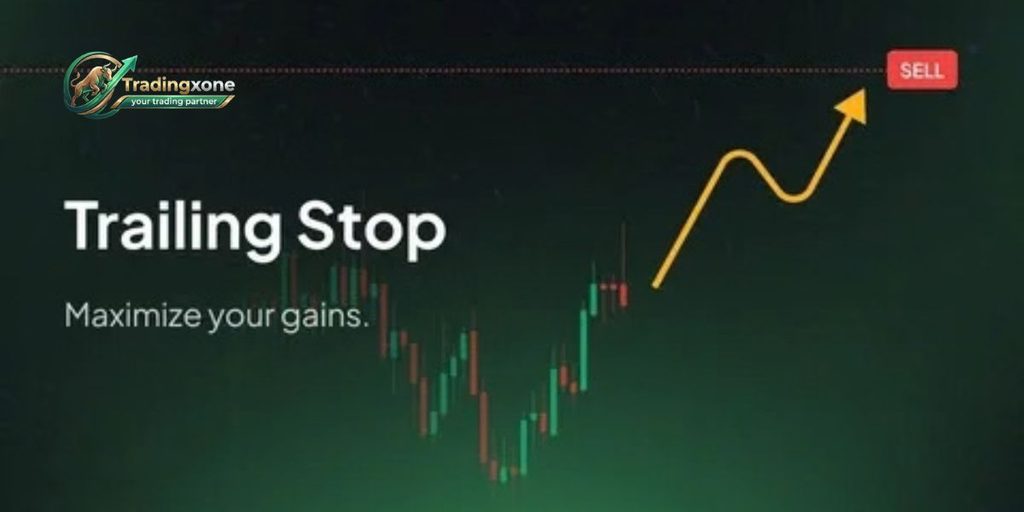
A trailing stop moves with price in your favor but doesn’t move back against you. If BTC rises from $30,000 to $35,000 with a 10% trailing stop, your stop rises to roughly $31,500. If price then reverses, the stop stays at $31,500 rather than falling with it, letting you capture more of an extended move without manually adjusting your exit. Most major exchanges support trailing stops natively; check your platform’s order-type documentation for exact syntax.
How to Calculate Position Size Around Your Stop Loss
Your stop-loss price should come from the chart (a real invalidation level). Your stop-loss distance then determines your position size, so your dollar risk stays fixed no matter how far away the stop sits.
Formula:
Position Size = (Account Risk in $) ÷ (Entry Price − Stop Price)
Worked example:
- Account size: $10,000
- Risk per trade: 1% = $100
- Entry: BTC at $30,000
- Stop: $28,500 (a support level), so stop distance = $1,500
- Position size = $100 ÷ $1,500 = 0.067 BTC (≈ $2,000 position)
Notice the stop location didn’t change to fit a comfortable dollar amount. The position size changed instead. This is the piece most beginner guides skip, and it’s the difference between a stop-loss that reflects real chart structure and one that’s just guessed.
How to Place a Stop-Loss Order (Step-by-Step)
The exact screen varies by exchange, but the general flow is consistent across most platforms:
- Open the trading pair you want to trade (spot or futures/perpetual).
- Enter your position via a market or limit order.
- Locate the stop-loss / TP-SL field, often in “Advanced” order settings or under your open position.
- Enter your stop (trigger) price, the level calculated using one of the five methods above.
- Choose the order type that fills once triggered, usually a stop-market order (fills immediately at the next price) or a stop-limit order (fills only at your specified limit price or better).
- Confirm and review the order before submitting, checking that the trigger price and side (buy-stop vs. sell-stop) are correct.
- Double-check it’s live by viewing your open orders after entry.
Always check your specific exchange’s own order-type documentation before your first live trade, since trigger conditions, minimum distances, and fee treatment can differ by platform.
Common Stop-Loss Mistakes to Avoid
| Mistake | Why It Hurts | Fix |
| Setting stops too tight | Normal volatility triggers the stop before the trade idea plays out | Base the stop on ATR or a real support/resistance level, not a feeling |
| Ignoring volatility | A fixed 5% stop can be too tight on a volatile altcoin and too wide on a stable major pair | Adjust stop distance to the asset’s actual recent volatility |
| Moving the stop further away emotionally | Turns a small planned loss into a large unplanned one | Decide your stop before entry and don’t move it against you once set |
| Not using a stop-loss at all | Leaves loss completely open-ended | Always define an exit before entering |
| Sizing the position first, stop second | Forces the stop to an arbitrary price that ignores the chart | Set the stop from chart structure, then size the position to match your risk |
Frequently Asked Questions
What is a stop loss in trading?
A stop loss is an order that automatically closes your position once price reaches a level you set, capping how much you can lose on that trade.
How do you set a stop loss in crypto?
Choose a method (percentage, dollar amount, ATR/volatility, support/resistance, or moving average), enter that trigger price in your exchange’s stop-loss field when opening or managing a position, and confirm the order.
What is a good stop-loss percentage for crypto?
There’s no universal number. It depends on the asset’s volatility and your risk tolerance; many traders use somewhere between 2% and 10%, adjusted using tools like ATR rather than a flat rule.
Should I set a stop loss for every crypto trade?
Most experienced traders set one for every position, since crypto trades 24/7 and can move sharply while you’re away from the screen.
What’s the difference between a stop-loss and a trailing stop?
A regular stop-loss sits at a fixed price. A trailing stop moves in your favor as price rises (or falls, for shorts) but locks in place if price reverses, helping capture more of a winning move.
Can a stop-loss order fail or not fill at my exact price?
Yes. In fast-moving or illiquid markets, a stop-market order can fill at a worse price than your trigger (slippage), and a stop-limit order can fail to fill at all if price gaps past your limit price.
Where should I place my stop loss?
At the price level where your original trade idea would actually be proven wrong, typically just beyond a support/resistance level, ATR-based buffer, or moving average, not simply at an amount that “feels” affordable.
Conclusion
A stop-loss order only works if it’s placed with intention: at a real invalidation level, sized to match your account risk, and set before emotions have a chance to interfere. Pick one of the five methods above that fits your trading style, run the position-sizing math every time, and resist the urge to move your stop once a trade is live. For more practical, no-hype risk management guides like this one, Trading Xone covers the mechanics that actually protect your capital, not just the theory behind them.
Disclaimer: This article is for educational purposes only and is not financial advice. Cryptocurrency trading carries a high risk of loss.