Risk management in buying and selling USA is one of the maximum important abilities any trader can broaden, whether you are just beginning out or have been energetic inside the Stock Market for years. In the quick-shifting world of monetary markets — from the foreign exchange market to futures contracts and CFD buying and selling — understanding a way to defend your capital can imply the distinction between lengthy-time period achievement and a devastating loss.
At Trading Xone, we consider that no strategy, irrespective of how exact, can replace a stable basis in managing your buying and selling risk. This guide will stroll you via the whole thing you want to recognize, in simple and clear language, so you can alternate with confidence and control.
What Is Risk Management and Why Does It Matter?
At its middle, hazard control is the process of figuring out, knowledge, and controlling the dangers worried in every change you’re making. Every time you enter the marketplace — whether or not you are day buying and selling on the S&P 500, placing a futures agreement on Crude Oil, or operating with Currency Derivatives — you’re exposing your money to marketplace risk. Without a plan to manipulate that hazard, even a few bad trades can wipe out weeks or months of profits.
In the united states, marketplace contributors face a huge style of dangers each unmarried day. These encompass marketplace volatility as a result of economic and news events, liquidity risk when there are not enough buyers or sellers at your fee, credit threat from counterparties, systemic threat from broader market collapses, and operational hazard from technology screw ups. There is also regulatory threat, mental threat, model hazard, occasion threat, attention chance, and us of a threat — all of that can have an effect on your trading choices and your account equity. Understanding these risks is the first step in the direction of shielding yourself from them.
You can also read about Why is money management important
The Power of Stop-Loss Orders and Take-Profit Orders
One of the most basic and effective tools in danger management is the forestall-loss order, regularly written as forestall-loss (S/L). A prevent-loss is an training you deliver for your dealer that mechanically closes your alternate while the fee reaches a positive degree, proscribing how a whole lot you can lose on any single trade. For example, in case you purchase a stock at $50 and set your forestall-loss at $forty seven, your most loss on that trade is $3 in keeping with share. This easy tool can shield you from emotional control failures — moments whilst worry or greed push you to maintain a losing role for too lengthy.
Alongside the stop-loss (S/L) is the take-profit order, or take-income (T/P). This is a goal charge at which your alternate routinely closes and locks in your gains. Together, forestall orders and take-income orders outline your loss parameters and earnings exit point before you even input a alternate. Many experienced investors additionally use trailing prevent orders, which flow with the fee because it rises, protecting income even as nevertheless allowing the alternate to grow. For folks who want more safety, guaranteed stops and protective puts or disadvantage placed alternatives offer extra protection nets in risky markets.
Understanding the Risk-Reward Ratio
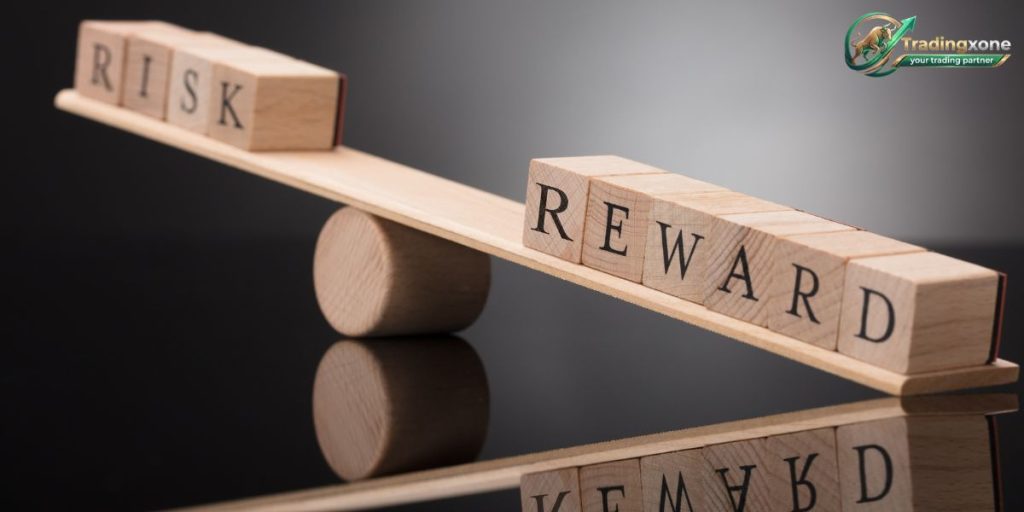
The danger-praise ratio, additionally known as the threat/praise ratio or hazard-to-reward ratio, is a easy calculation that tells you the way much potential profit you’re targeting for every greenback you’re risking. For instance, if you hazard $100 to potentially make $300, your risk-praise ratio is 1:3. Most expert buyers purpose for a minimum ratio of 1:2, that means they best take trades where the expected go back is as a minimum two times the hazard. This approach, while blended with regular earnings targets, guarantees that even if you lose greater trades than you win, you may still come out ahead over time.
Platforms and training resources from institutions just like the CME Institute and the CFA Institute emphasize this precept heavily. Whether you are trading S&P 500 contracts, Canadian Dollar contracts, or different Futures & Options within the Capital Market, keeping a robust risk-to-praise ratio on each exchange is a cornerstone of sustainable trading.
Position Sizing: The 2% Rule Explained
One of the most extensively encouraged techniques for threat management is the two% Rule. This rule states which you ought to never risk more than 2% of your overall account equity on any unmarried trade. So if your account holds $10,000, the maximum you should risk on one trade is $200. This kind of position sizing ensures that even a string of bad trades will not destroy your account. It keeps you in the game long enough to recover and find better trading opportunities.
Position sizing works hand in hand with your stop-loss placement. Once you know where your stop loss is — how many ticks or points away from your entry — you can calculate exactly how many shares, contracts, or lots to trade so that your loss, if the stop is hit, stays within your defined max-loss limit. Understanding the tick value of the instruments you trade, whether it is Crude Oil futures, Currency Derivatives, or equities, is essential for accurate position sizing.
Leverage, Margin Trading, and Margin Calls
Leverage is one of the maximum powerful and most dangerous gear to be had to buyers inside the USA. When you change on margin — whether or not through a conventional brokerage, leveraged derivatives, or CFD buying and selling — you are essentially borrowing money to govern a larger function than your account stability would in any other case permit. This can amplify both profits and losses significantly. Understanding your leverage ratio, your initial margin, and your protection margin is critical before you enter any leveraged position.
A margin call happens when your account stability falls under the specified preservation margin, forcing you to either deposit greater funds or near positions at a loss. This is one of the maximum worrying events a trader can face, specially all through intervals of high marketplace volatility. Many retail platforms, particularly those regulated by USA authorities, now offer negative balance protection, which prevents your account from going below zero. Brokers like Gotrade Securities Inc. and platforms operating under the Labuan Financial Services Authority and similar regulatory bodies have specific margin requirements traders must follow. Always make sure you understand the margin requirements and leverage available through platforms like IG accounts before you place a trade.
Using Technical Tools for Better Trading Decisions
Good danger management does no longer exist in isolation — it really works alongside your broader buying and selling techniques. Technical evaluation tools like help and resistance tiers, shifting averages, interactive charts, and rsi divergence indicators help you pick out high-probability entry alerts and smarter income taking points. The rsi divergence, for instance, can warn you while a rate trend is weakening earlier than it simply reverses, providing you with a danger to tighten your forestall-loss or reduce your function size before the marketplace turns towards you.
The liquidity sweep is any other idea investors use to recognize sudden charge actions that clean out clusters of stop-loss orders before reversing within the contrary route. By recognizing liquidity sweep patterns, traders can avoid placing their stops in obvious locations where they are likely to get caught out. A day buying and selling simulator is a brilliant manner to practice spotting these styles and trying out your risk management policies with out setting real money on the road. Many experienced traders advise spending time with a day buying and selling simulator before going stay, as it allows build Trading Psychology and emotional control in a safe environment.
The Role of Fundamental Analysis and Market Conditions
While technical evaluation allows with timing your entries and exits, fundamental analysis enables you recognize the wider picture. Factors like earnings reports, hobby price decisions, inflation information, and geopolitical occasions can all create rapid marketplace movements that catch investors off defend. By staying informed about monetary and news events, you could modify your function sizing, tighten your prevent-loss, or even step apart from the market completely on days whilst the danger of massive, unpredictable swings is unusually excessive.
For investors energetic inside the foreign exchange marketplace or coping with Canadian Dollar contracts and different forex pairs, understanding the monetary fitness of various international locations — also referred to as economic health evaluation — is a crucial a part of dealing with u . S . Hazard and occasion risk. Many skilled investors use price indicators and limit orders to manipulate their entries at some point of information-heavy durations, decreasing the hazard of being stuffed at a terrible price during severe market situations.
Diversifying Your Portfolio and Managing Concentration Risk
Concentration danger is the hazard of having too much of your capital tied up in a unmarried asset, sector, or marketplace. Diversifying your portfolio across different instruments — such as stocks, Futures & Options, Currency Derivatives, and Capital Market products — can reduce this risk considerably. When one market falls, another may rise or remain stable, balancing out your overall performance. Many traders who use platforms like Indiabulls Securities or access markets through a trading app find it helpful to spread their trades across multiple sectors to avoid putting all their eggs in one basket.
However, diversification alone is not enough. Each position still needs its own stop-loss plan, its own position size calculation, and its own risk-reward target. Think of diversifying your portfolio as reducing the impact of any single bad outcome, not as an excuse to skip individual trade risk management. Trading Xone regularly covers strategies for building diversified trading plans that still maintain strict individual trade discipline.
Trading Psychology: The Often Overlooked Risk
Perhaps the most underestimated area of risk management is Trading Psychology. Fear, greed, overconfidence, and revenge buying and selling are all psychological risks which could purpose even the exceptional technical setup to result in a loss. When investors deviate from their plan — moving their stop-loss similarly away out of desire, ignoring their max-loss restriction, or over-sizing a role after a string of wins — they are letting feelings force their buying and selling decisions instead of common sense and strategy.
Building emotional control requires practice, discipline, and often keeping a detailed trading journal. Tracking your CE tracker data — your consistency, execution, and results over time — helps you identify patterns in your own behaviour that may be hurting your performance. Many professional traders and institutions, including those that follow guidelines from the CFA Institute and CME Institute, emphasize that psychological risk management is just as important as technical or fundamental analysis.
Day Trading Specific Risk Rules
Day trading comes with its own set of risk management challenges.Because day investors open and close positions inside a single session, they are especially uncovered to intraday marketplace volatility and liquidity risk. The Pattern Day Trader rule within the USA calls for traders with much less than $25,000 in a margin account to limit themselves to a few day trades in a rolling five-day period. Understanding this rule and the schooling necessities set by using regulators is important for all and sundry who wants to day alternate actively.
Using a day trading simulator before going live is strongly recommended. A simulator lets you practice your risk management rules, test strategies, and practice reading rsi divergence signals, spot liquidity sweep patterns, and refine your stop-loss placement — all without financial risk. Many white papers and research reports published by institutions and trading platforms suggest that traders who use simulators consistently before going live perform significantly better in real market conditions.
You can also read about Satoshi Nakamoto quotes
Capital Preservation: Your Most Important Goal
Above all else, the primary goal of risk management is capital preservation. Protecting the money you have is more important than chasing big profits. A trader who loses 50% of their account needs to earn a 100% return just to break even — a fact that highlights why avoiding large losses is so critical. The Marked to Market process, which recalculates the value of your positions daily, makes it clear how quickly losses can compound if they are not controlled.
Whether you are trading through IG accounts, a trading app, or a direct-access platform, always know your trader risk parameters before you start a session. Know your max-loss limit for the day, your profit objectives, and your loss parameters. If you hit your day by day loss limit, stop trading and review what occurred.Capital preservation is what keeps you in the game long enough to develop into a consistently profitable trader.
Conclusion
Risk management in trading USA is not just a set of guidelines — it’s far a attitude and a subject that separates a hit investors from folks who struggle to continue to exist in the markets. By the use of forestall-loss orders, defining your risk-praise ratio, sizing your positions successfully, know-how leverage, and staying on top of things of your emotions, you provide your self the high-quality viable basis for lengthy-time period success. Whether you opt for the Stock Market, the foreign exchange marketplace, or Futures
Frequently Asked Questions
Q1: What is the maximum essential rule in hazard control for traders in the USA?
The 2% Rule is broadly considered the most critical guiding principle — never danger more than 2% of your overall account equity on a single trade to defend your capital over the long time.
Q2: What is the difference among a forestall-loss order and a take-profit order?
A stop-loss (S/L) automatically closes your change at a set fee to limit losses, at the same time as a take-income (T/P) closes your change when it reaches a target fee to fasten on your profits.
Q3: How does an afternoon trading simulator help with threat control?
A day buying and selling simulator lets you exercise your hazard control regulations and build Trading Psychology in a totally threat-loose environment before you dedicate real money to the markets.
Q4: What is a margin call and how can investors avoid it?
A margin name happens whilst your account stability falls under the specified preservation margin level, and buyers can keep away from it by way of using proper role sizing, preserving leverage low, and continually having a stop-loss in vicinity.