
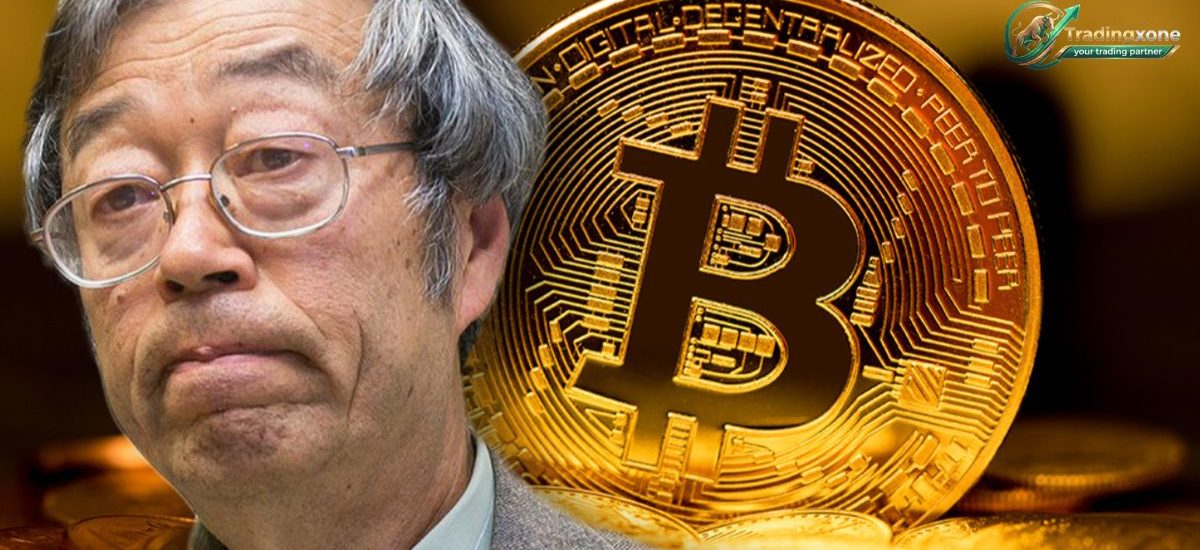
Before we dive into Satoshi Nakamoto’s costs, it is helpful to recognize who this mysterious parent has clearly become — or is. Satoshi Nakamoto quotes is the pseudonymous author of Bitcoin, the area’s first truly decentralized digital currency. Whether Satoshi is one man or woman or a set of humans, nobody is aware of for sure. What we do realize is that during 2008, Satoshi published the Bitcoin white paper, a nine-page document that introduced a peer-to-peer virtual currency gadget to the sector.
It was shared on the Cryptography Mailing List and addressed to a small group of cryptographers and virtual-cash enthusiasts. That simple act would go on to reshape how thousands and thousands of Americans — and those around the world — think about cash, trading, and monetary freedom.
Satoshi’s genuine identification has by no means been confirmed; however, the ideas this individual left behind are very much alive. Through posts on the Bitcointalk Forum, messages on the Cryptography Mailing List, and the Bitcoin white paper itself, Satoshi left a rich series of author of bitcoin rates and bitcoin sayings that remain to encourage developers, buyers, and everyday human beings across America. These phrases have not just been about trading or technology — they have been about human freedom, economic belief, and the future of virtual cash.
The Genesis Block and a Hidden Message
One of the most well-known and significant of all Satoshi Nakamoto prices isn’t found in a forum post or an email. It is embedded into the Bitcoin blockchain itself. On January 3, 2009, Satoshi mined the first actual block of the Bitcoin blockchain — what is now known as the Genesis block. Inside this number one block, Satoshi encoded a headline from The Times newspaper: “Chancellor on breaking factor of 2nd bailout for banks.” This was not just a timestamp. It was a statement. It was Satoshi’s way of pointing to the broken financial system — controlled by a central bank — that Bitcoin was designed to replace.
For Americans watching the Federal Reserve make interest-rate cuts and bail out big banks during the 2008 financial crisis, this message hit close to home. The Bitcoin network was born at exactly the moment when trust in traditional financial institutions was at an all-time low. Satoshi’s decision to embed that message in the Genesis block showed that Bitcoin was not just a technical experiment — it was a response to a real-world problem that American families, workers, and small businesses were suffering through every single day.
You can also read about Risk management in trading
Trust, Banks, and Financial Freedom
Many of the most powerful creators of Bitcoin quotes are about trust — or rather, the lack of it. Satoshi believed that the root problem with conventional currency is the trust required to make it work. You have to trust that the central bank will not debase the currency. You have to trust that banks will hold your money safely. You have to trust that your credit card company is not overcharging you or selling your data. But as Satoshi pointed out in multiple posts and writings, this trust is often broken — and the damage always falls hardest on ordinary people, not the institutions themselves.
This idea was radical in 2008 and remains powerful today. In the United States, inflation data continues to show that the purchasing power of the dollar shrinks every year. The Federal Reserve prints money, adjusts interest-rate cuts, and manages the economy in ways that most regular Americans have no input into. Satoshi’s vision for Bitcoin was to create a system where no single person, no government, and no central bank could control the cryptocurrency supply. Instead, the supply is governed by math — specifically, a hash-based proof-of-work system where CPU power is used to validate transactions and secure the Bitcoin network against manipulation of any kind.
About Bitcoin as Digital Gold
Among all the bitcoin sayings attributed to Satoshi, perhaps none is more discussed in investment circles across the USA than the idea of Bitcoin as a store of value. Satoshi wrote about Bitcoin as a digital asset that could serve as a long-term store of value — similar to gold, but better in many ways. Unlike gold, Bitcoin can be sent instantly across the world as a peer-to-peer Bitcoin transaction. It does not require a truck, a vault, or a bank. It only requires a private key and a wallet address to receive and hold value across borders without asking anyone for permission.
About bitcoin as a digital means of payment, Satoshi believed strongly that this new form of digital money could free people from the inefficiencies and fees of traditional payment systems. Every time you use a credit card or bank transfer, transaction fees eat into your money. These fees support large financial middlemen who add no real value to your transaction. In contrast, peer-to-peer Bitcoin transactions allow people to send value directly to one another using Bitcoin addresses, without a third party taking a cut. While transaction volume has grown dramatically since 2009, the core idea remains the same: send money to anyone, anywhere, with no permission needed from any institution.
Satoshi’s Advice on Security
Not all of Satoshi’s wisdom was philosophical. Some of it was deeply practical, and it gives advice that still applies to every Bitcoin user in the United States today. In discussions on the Bitcointalk Forum and through the Cryptography Mailing List, Satoshi talked extensively about how the Bitcoin blockchain stays secure.
The system design was built around the idea that honest participants — those running full nodes and contributing CPU power — would always outnumber bad actors as long as the network grew large enough. This is the foundation of Bitcoin’s security solution against online attacks and attempts to corrupt the blockchain.
Satoshi also advised about protecting your own digital assets. Keeping your personal key secure is the most important aspect for a Bitcoin holder. Unlike a credit card, there is no customer support line to name if you lose access to your cryptocurrency wallet. Once a personal secret is lost, the cash related to those Bitcoin addresses is long past for all time. This is why Satoshi’s device layout emphasised individual responsibility — a concept that resonates deeply with the American values of self-reliance and personal responsibility that have described by the USA. Due to the fact of its founding.
Satoshi became increasingly thoughtful about the technical risks dealing with the community. He recounted that SQL command injections, malformed records, and different software vulnerabilities were real threats that would damage a developing peer-to-peer network. His method for building a safety service was transparency — open-source code that anybody ought to evaluate, check, and improve. This philosophy of open collaboration turned out to be one of Bitcoin’s finest strengths. Thousands of developers around the sector, which include many across the US, have contributed to making the Bitcoin community extra strong and resilient against all kinds of security threats over the years.
The Hal Finney Connection
No discussion of Satoshi Nakamoto’s rates could be entire with out bringing up Hal Finney, one of the earliest and most crucial figures in Bitcoin’s history. Hal Finney became a splendid American cryptographer who acquired the first actual peer-to-peer Bitcoin transaction from Satoshi himself on January 12, 2009, simply nine days after the Genesis block was mined.
Satoshi dispatched 10 Bitcoins in what has come to be a historic second for digital currency. Hal Finney believed deeply in the ability of Bitcoin as a digital asset, and his enthusiasm helped push Satoshi’s imaginative and prescient vision forward in the fragile and unsure early days.
Hal Finney himself left behind powerful bitcoin sayings of his own. He wrote about his belief that Bitcoin would grow to be worth a great deal if it ever became the dominant form of value transfer worldwide. At the time, that seemed like an unlikely dream shared by only a handful of people.
Today, Bitcoin’s marketplace valuation frequently reaches into the trillions of dollars, and it’s widely held by institutions, governments, and individuals throughout the USA as both a digital means of price and a protracted-time period keep of value. The friendship and collaboration between Satoshi and Hal Finney remains one of the most inspiring stories in the whole history of virtual money.
On Privacy and Digital Signatures
One area where Satoshi gave advice that still sparks debate today is privacy. The Bitcoin white paper describes a system where users can protect their identity by using fresh Bitcoin addresses for every transaction. Rather than linking your real name to a public key, Bitcoin’s design allows for a level of privacy through the use of cryptographic proof and digital signatures. Each transaction is verified not by a bank or security service, but by the mathematics of digital signatures embedded permanently in the Bitcoin blockchain itself.
Satoshi’s writings on this topic touch on something deeply American — the right to financial privacy. In the United States, debates about surveillance, government overreach, and financial freedom have been ongoing for decades. The use of cryptographic functions in Bitcoin gives ordinary people a way to transact without their every move being tracked by a central bank, credit card company, or government agency.
This is not about trading illegally or hiding from responsibilities — it is about maintaining the basic human dignity of financial privacy that fiat currencies and traditional digital banking have increasingly eroded over time.
About Trading and Market Wisdom
While Satoshi Nakamoto was not primarily a trading advisor, some of the most widely shared creators of Bitcoin relate to investing and long-term market behavior. Satoshi understood that for Bitcoin to succeed as digital money, it needed to achieve market competition with existing payment systems and fiat currencies like the US dollar.
About trading, Satoshi’s perspective was always long-term — the goal was not to make a quick profit, but to build a peer-to-peer network and digital currency system that would stand the test of time and grow stronger with every passing year.
This is wise advice that many American traders and investors have taken to heart. Rather than chasing short-term gains, a growing number of US investors are embracing Bitcoin’s core identity as a digital asset with a fixed cryptocurrency supply.
Unlike gold or fiat currencies, Bitcoin’s supply is capped at 21 million coins — a design choice that Satoshi placed into the system design from the very beginning. This shortage is what offers Bitcoin its strength as a store of value and what makes its market valuation so compelling to long-term holders who honestly recognize what they may be keeping.
Hard Forks and the Future of Bitcoin
Satoshi advised on many technical aspects of Bitcoin, which are nevertheless debated in developer communities across the United States nowadays. One of the most important subjects is that of hard forks — adjustments to the Bitcoin community’s guidelines that aren’t backward well matched and bring about a permanent split.
Satoshi believed strongly in consensus and in letting the Bitcoin community develop organically over the years. The mining nodes and complete nodes that hold the Bitcoin blockchain running are distributed all over the world, which means that no single authority, agency, or person can force an alternative without a huge settlement from the complete network of members.
This design philosophy — decentralization above all else — is one of the most enduring legacies of all that Satoshi Nakamoto rates. In the United States, where conversations about economic regulation, Central Bank Digital Currencies, and the position of the Federal Reserve are developing louder each yr, Bitcoin’s basically decentralized layout gives a compelling alternative.
Whether you are a developer running mining nodes, an investor protecting cash in a cryptocurrency wallet, or someone mastering virtual currency for the first time, Satoshi’s authentic, imaginative, and prescient vision gives a clear north star: an economic gadget that no one controls and that everyone, anywhere, can use freely.
You can also read about is donald trump satoshi
Why These Quotes Still Matter in the USA
More than fifteen years after the Bitcoin white paper was first posted, Satoshi Nakamoto costs keep to inspire a new technology among American thinkers, developers, and buyers. The United States is home to a number of the world’s most energetic Bitcoin communities, exchanges, mining operations, and blockchain developers.
From Silicon Valley to Wall Street, from Texas ranchers’ web hosting mining nodes to college students sending their first peer-to-peer Bitcoin transaction, the ideas Satoshi recommended in 2008 and 2009 have taken deep root in American subculture and continue to spread every day.
The beauty of Satoshi’s bitcoin sayings is their simplicity. They are not full of jargon that most effective specialists recognize. They speak to widespread human concerns — agree with, freedom, equity, and the deep desire for a higher monetary device.
About bitcoin and its future, Satoshi became cautiously positive, noting that the peer-to-peer network might need to develop slowly and thoughtfully to keep away from the errors of the structures it sought to replace. That humility and persistence are possibly the most treasured lessons any American investor, developer, or everyday user of digital cash can take from the words of the mysterious creator of Bitcoin.
The Bitcointalk Forum posts, the emails on the Cryptography Mailing List, the cautiously designed device of public key cryptography, public key addresses, and cryptographic proof — it all tells the tale of a person or group who, without a doubt, believed that digital money could change the sector for the better.
In a country where inflation data worries millions and trust in the Federal Reserve runs thin, those words carry more weight than ever. The legacy of Satoshi Nakamoto is not only a blockchain full of transactions — it’s far more a dwelling philosophy of financial freedom, encoded one block at a time.
Conclusion
Satoshi Nakamoto charges the USA to remind us that the most powerful thoughts are frequently the handiest ones. A peer-to-peer virtual currency.No central bank. No credit card fees. No inflation controlled by someone else. Just you, your non-public key, and the Bitcoin network walking definitely for your behalf. Whether you’re deep into buying and promoting, curious about the Bitcoin blockchain, exploring your first cryptocurrency wallet, or really looking to recognize what all of the fuss is about, the phrases of Satoshi Nakamoto offer timeless guidance rooted in arithmetic, agreement, and an unwavering notion of human freedom.
As full nodes multiply, as transaction volume grows, and as more Americans choose digital asset ownership over dependence on fiat currencies, the vision Satoshi laid out inside the Bitcoin white paper draws ever closer to the direction of truth. These bitcoin sayings are more than words — they will be the blueprint for a new type of money that belongs to all of us, is controlled by way of no person, and is built to ultimate for all time.
Frequently Ask Questions
Who is Satoshi Nakamoto?
Satoshi Nakamoto is the anonymous writer of Bitcoin who posted the Bitcoin whitepaper in 2008 and released the network in 2009.
What is the most famous Satoshi Nakamoto quote?
One of the most well-known fees is: “If you do not agree with it or no longer get it, I do not have the time to try to steer you, sorry.” — highlighting Bitcoin’s self-explanatory nature.
Where can I find proper charges through Satoshi Nakamoto?
Authentic prices come from the Bitcoin whitepaper, early forum posts on Bitcointalk, and emails shared through early builders.
Why are Satoshi Nakamoto’s prices vital?
His expenses provide an explanation for the philosophy behind Bitcoin, decentralization, and monetary freedom, shaping the crypto movement globally.